
Resources and posters
Practical safeguarding resources, best practice guidance and posters to help settings strengthen safeguarding arrangements.
Best practice examples and resources
Whilst every provider may not be able to utilise every approach included in these examples amd resources, many of the suggestions are scalable to the size of your setting. We will continue to add examples and resources when more become available.
- Safeguarding and child protection self-assessment tool, NSPCC Learning: Free self-assessment tool from the NSPCC that will help your setting audit current safeguarding and child protection arrangements.
- Safer recruitment, NSPCC Learning: Practical advice and guidance from the NSPCC on ensuring your setting has safe and robust recruitment practices.
- EYFS safeguarding reforms for childminders: Information from Coram PACEY on the 2025 changes, what they mean for childminders, and supporting resources. Supporting YouTube videos are also available.
- A manager’s guide to staff supervision in early years settings: A blog from National Day Nurseries Association (NDNA) on the importance of regular, meaningful supervisions in early years settings
- Learning hub | Child Safeguarding Practice Review Panel: Sources from the child safeguarding practice review panel, bringing together learning and insights from child safeguarding reviews to support stronger practice for children.
Posters
The below are posters that you might want to display in your settings. You may also want to display the information on your provider’s website.
Some of these will be better placed in an area that parents can easily access and review whilst others will be more relevant to staff, or you may want to display in multiple areas. We have suggested the target audience, but it is for providers to decide what works best in them. It is recommended these are displayed in areas where parents can easily see them:


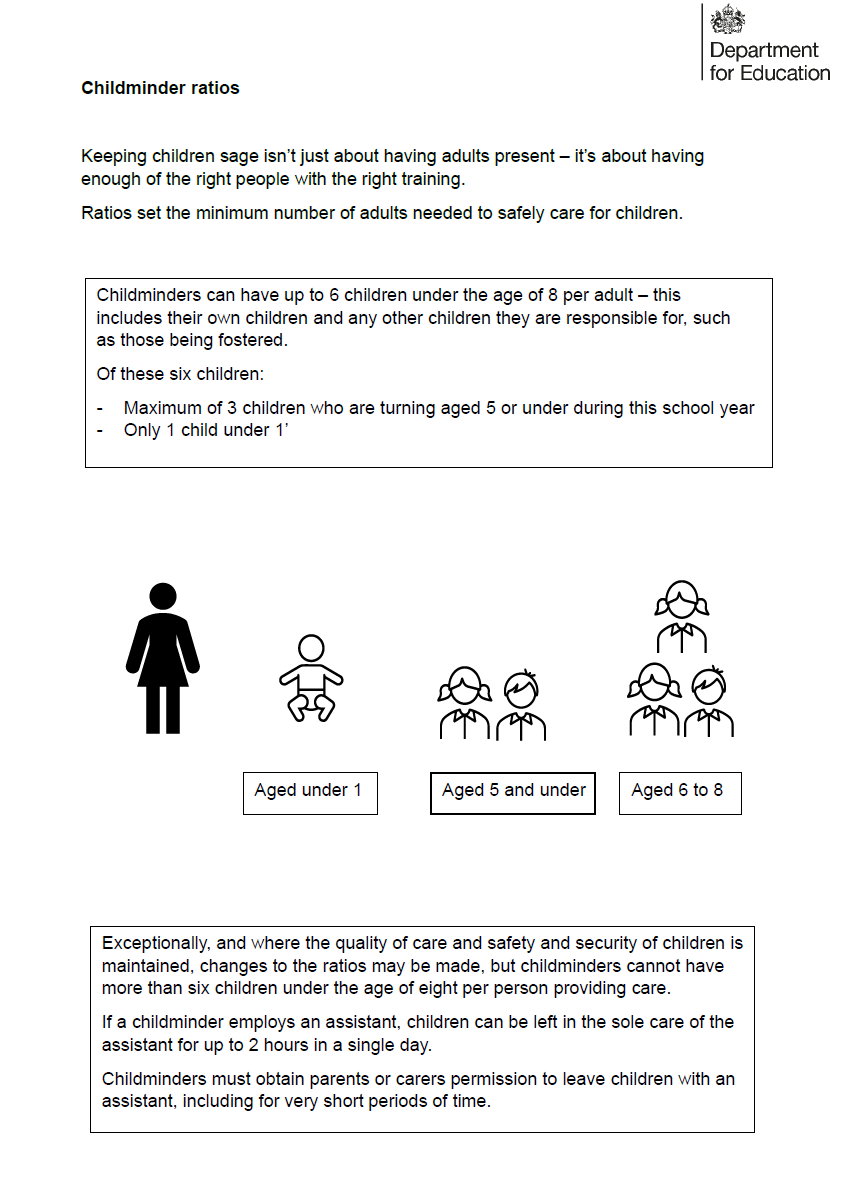
Qualifications posters


Complaints


It is recommended these are displayed in staff areas:
The four main types of harm


Further reading
The detail in these pages is a simplified summary of the EYFS and other relevant guidance documents. Below are links to more detailed information on different areas and other reading staff may want to review.
Early years foundation stage (EYFS) statutory framework - GOV.UK: This is the guidance that you will need to be most familiar with. The EYFS statutory framework sets the standards that school and childcare providers must meet for the learning, development, and care of children from birth to 5.
Help for early years providers : EYFS profile assessment support: Provides EYFS profile guidance, bite-sized videos, and case studies.
Early years qualification requirements and standards - GOV.UK: This statutory guidance details the qualifications that staff must hold to be included in the specified staff:child ratios at levels 2, 3 and 6 of the early years foundation stage (EYFS).
Working together to safeguard children - GOV.UK: Statutory guidance on multi-agency working to help, support and protect children.
Keeping children safe in education - GOV.UK: Statutory guidance for schools and colleges on safeguarding children and safer recruitment. It also includes school-based early years providers and maintained nursery schools.
SEND code of practice: 0 to 25 years - GOV.UK: Statutory guidance on the special education needs and disabilities (SEND) system for children and young people aged 0 to 15.
SEND: guide for early years settings - GOV.UK: A guide for early years settings on the support systems for children and young people with special education needs and disability.
Child abuse concerns: guide for practitioners - GOV.UK: Guidance to help practitioners identify the signs of child abuse and neglect and understand what action to take.
Types of Child Abuse and How to Prevent Them | NSPCC: Advice from the NSPCC on different types of child abuse, how to spot the signs, and what you can do to help keep children safe.
Information sharing advice for safeguarding practitioners - GOV.UK: Guidance on information sharing for people who provide safeguarding services to children, young people, parents, and carers.
Early Years Foundation Stage nutrition - GOV.UK: Guidance helping early years providers offer healthy, balanced, and nutritious food.
Help for early years providers : Food safety: Learn how hygiene and safe food preparation practices protect children in an early years setting.
Help for early years providers : Safer sleep: Help with how to provide babies and children with a safer sleep environment in your setting.
Help for early years providers : Internet safety: Get insights on how screen use impacts young children and how you can use screen to benefit young children’s development in your early years setting.
Safeguarding children and protecting professionals in early years settings: online safety considerations - GOV.UK: Guidance to help those who work in early years settings to consider their practice and to take steps to safeguard both children and adults online.
NSPCC research and resources | NSPCC Learning: NSPCC research and findings and practical guides that could help your setting.