
Birth to 1 year guidance
Good food introduction practices can help babies have a confident, healthy relationship with food.
Breastfeeding
The NHS provides information on the benefits of breastfeeding and on safe storage of expressed breast milk.
NHS Start for Life has helpful information and advice on breastfeeding.
Infant formula
The NHS provides information on types of formula.
NHS Start for Life has advice on how to make up infant formula and how to sterilise equipment.
Introducing solid foods or weaning

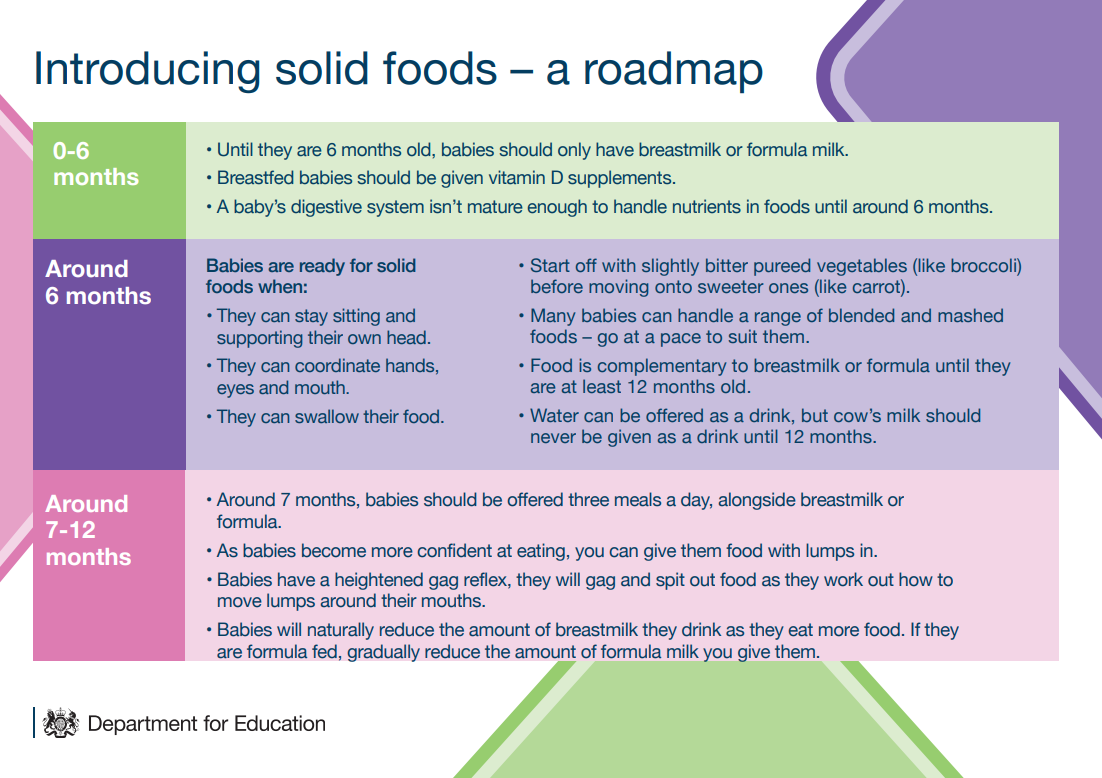
NHS Start for Life has advice on how to start weaning.
The NHS has advice on:
- first solid foods
- helping babies enjoy new foods
- choosing drinks and cups for babies and young children
- fussy eaters, including tips that you can pass on to parents or carers
Cutting food safely when introducing solid foods
Transcript
Transcript
Hello, my name is Sean. When I first became a chef, the first lesson I learned was on food preparation. I’d assumed that food preparation was all about slicing and cutting. However, I soon learned there was much more to it than this. Proper food preparation includes keeping children safe, reducing waste, and making a delicious and appetizing looking meal.
In this video, I’m going to share with you top tips and best practice tips we use every day in our nursery. Let’s start with broccoli and carrots.
Broccoli and carrots make great purees. Carrots are rich in beta carotene, antioxidants, and are a good source of fibre. Broccoli is packed with vitamins, including vitamin K, calcium, and fibre. To puree, chop them into pieces like this. Steam the broccoli and carrots for 10 to 12 minutes. Steaming helps retain the nutrients compared with boiling. Then whizz them in a blender or mash with a fork until smooth. When children can bite, tear, and chew food, you can steam the broccoli florets so they can be picked up and chewed.
40 grams of fruit and vegetables per serving is recommended to children under five. Here are some examples of what 40 grams looks like. Peppers are another great vegetable for small children. Full of vitamin C, they add texture and colour to any plate. You prepare peppers by cutting out the stalk and core like this. Scrape away any remaining seeds. Then remove the white pith here, which tastes slightly bitter. When children can bite, tear, and chew food, they can chew the pepper strips. From toddlers up, peppers are a great finger food and go well with dips like 40 grams of hummus. Cheese is a popular food with many children, but be aware that some children are lactose intolerant, and it can be a choking hazard. To prepare, choose a hard cheese like cheddar. Avoid mold ripened cheese and cheeses made from unpasteurized milk like brie, which contain more bacteria. For all children, cut it into thin slices so children can pick up and easily chew or suck it. Think about cream cheeses for spreading on toast or vegetables, and also mozzarella is lower in salt. Children need between 15 grams to 60 grams of dairy per serving, depending on the product.
Strawberries make a great dessert. At six months, babies like to chew and suck slices of them. At nine months, dice the strawberries. This encourages children’s pincer skill, using the index finger and thumb, as well as developing hand-eye coordination. From nine months plus, depending on the size of the fruit, cut strawberries into quarters or smaller so they can bite and chew. Again, a 40 gram portion size is recommended.
Learn more about food safety, including food and drinks to avoid for children aged 5 and under.
NHS Start for Life has advice on Preparing food safely for babies.
This video from Early Start Nutrition gives more advice on preparing food safely for young children.
Download a poster about choking hazards from the Food Standards Agency.
Foods to avoid
The NHS has information on which foods to avoid giving babies and young children.
NHS Start for Life has advice on food and drinks to avoid.